
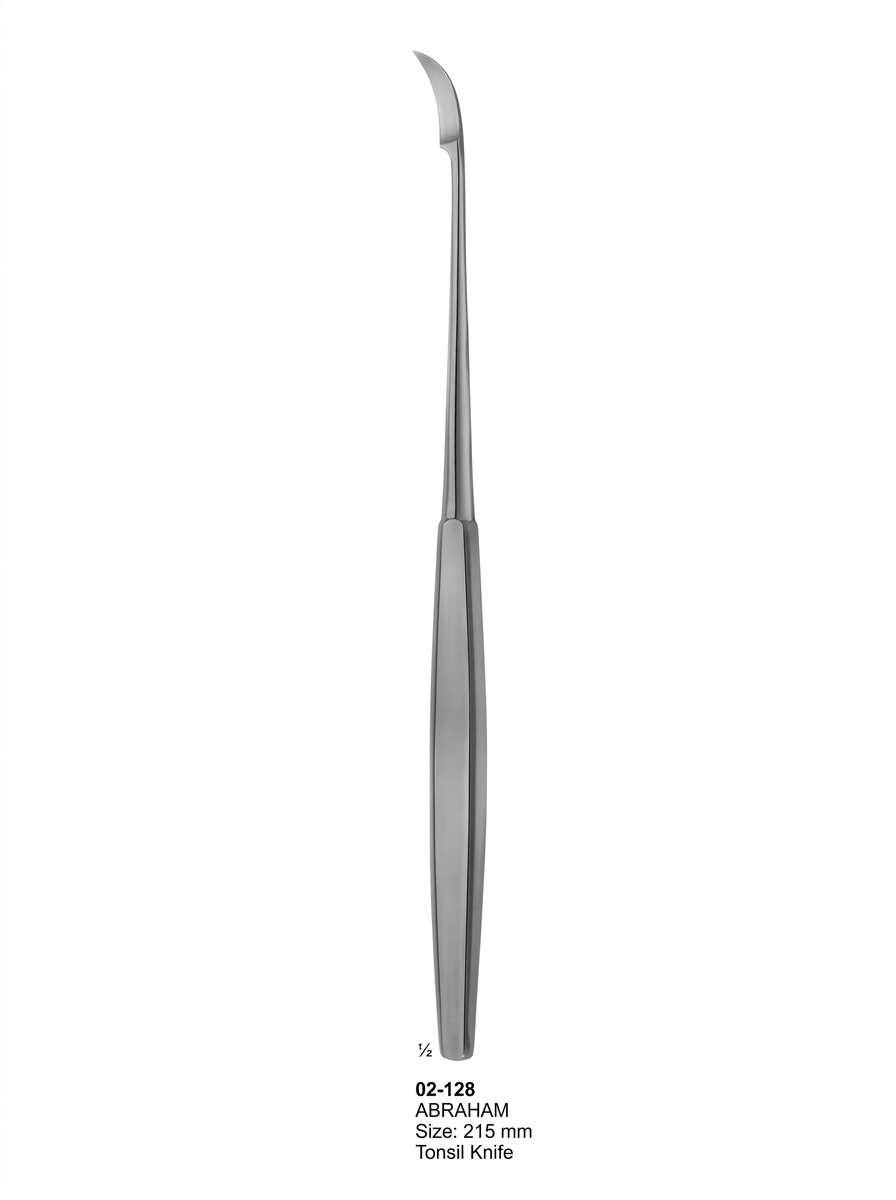
Cone Knives Myomatome Trigeminal and Tonsil Knives
Intro Description Engineered for specialized neurosurgical, gynecological, and otolaryngological procedures, the SIRGIKAL 02-128 Cone Knife Myomatome Trigeminal and Tonsil Knife delivers exceptional cutting precision and control in delicate anatomical dissection. Featuring an ultra-sharp, specialized blade profile designed to navigate restricted surgical planes, this instrument allows surgeons to perform meticulous tissue slicing, tumor enucleation, or precise fibroid and tonsillar dissections with minimal collateral trauma. Crafted from certified medical-grade stainless steel with a high-luster or anti-glare satin finish, it ensures dependable sharpness, balance, and durability across demanding clinical interventions.
Product Specifications
-
Item Code: 02-128
-
Material: Certified Medical-Grade Stainless Steel (ASTM F899 compliant)
-
Size: Standard Specialized Surgical Length
-
Finish: Satin (Anti-glare) / Mirror
Key Features
-
Precision-Honed Cutting Edge: Micro-ground and razor-sharp blade configuration ensures clean, effortless tissue division and minimal resistance during deep dissections.
-
Ergonomic Handle Grip: Well-balanced handle architecture provides superior tactile feedback, comfort, and steady manual control for the operating surgeon.
-
Specialized Blade Geometry: Anatomically tailored profile designed to reach deep-seated structures in neurosurgery (such as trigeminal fields), gynecology (myomectomy), and ENT procedures.
-
Autoclave-Resistant Passivation: Chemical citric passivation forms a dense chromium-oxide protective barrier, guaranteeing complete corrosion resistance across repeated high-temperature hospital sterilization cycles.
Usage
-
Neurosurgery: Specialized dissection and sectioning within sensitive neural fields, including trigeminal nerve procedures.
-
Gynecological Surgery: Precision slicing and enucleation during myomectomy and uterine tissue procedures.
-
Otolaryngology (ENT): Controlled dissection and separation of lymphoid tissue during tonsillectomy operations.