
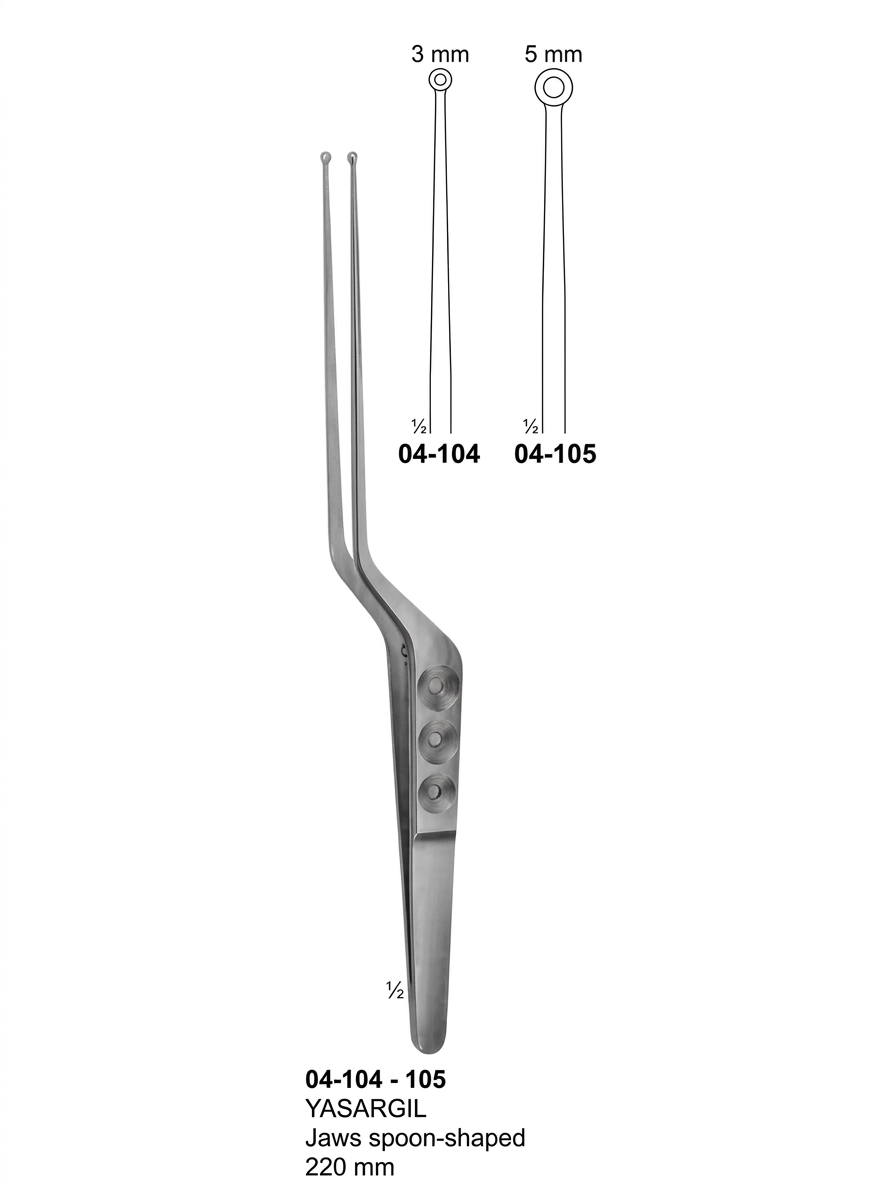
YASARGIL Forceps for grasping tissue tumors etc
Intro Description Engineered for neurosurgical, skull base, and delicate microsurgical interventions, the SIRGIKAL 04-104–04-105 Yasargil Forceps deliver ultra-fine tissue manipulation, precise tumor dissection, and absolute tactile control in highly restricted anatomical corridors. Featuring a specialized delicate profile and refined grasping tips tailored for neuro-oncology, this instrument allows surgeons to delicately handle fragile neural tissue, membranes, and tumor capsules with minimal surrounding disruption. Crafted from certified medical-grade stainless steel with a tension-balanced spring handle, it ensures dependable durability, smooth alignment, and long-lasting performance across rigorous hospital sterilization cycles.
Product Specifications
-
Item Code: 04-104 to 04-105
-
Material: Certified Medical-Grade Stainless Steel (ASTM F899 compliant)
-
Size: Standard Microsurgical Length (Yasargil profile)
-
Finish: Satin (Anti-glare) / Mirror
Key Features
-
Ultra-Fine Grasping Tips: Finely milled distal points engineered to securely engage delicate tumor tissue, cysts, and membranes without crushing or tearing fragile structures.
-
Microsurgical Spring Handle: Balanced shank architecture ensures smooth closure, exceptional tactile feedback, and reduced hand fatigue under high-magnification operating microscopes.
-
Optimized Alignment: Precision-engineered joint and tip closure guarantee absolute alignment accuracy and consistent pressure distribution.
-
Autoclave-Resistant Passivation: Chemical citric passivation forms a dense chromium-oxide protective barrier, guaranteeing complete corrosion resistance across repeated high-temperature hospital sterilization cycles.
Usage
-
Neurosurgery & Skull Base Surgery: Delicate dissection, grasping, and removal of intracranial tumors, neoplastic tissues, and sensitive neural membranes.
-
Operating Theatre Utility: Essential microsurgical instrument relied upon by neurosurgeons requiring maximum precision, touch sensitivity, and atraumatic handling in deep, confined surgical fields.