
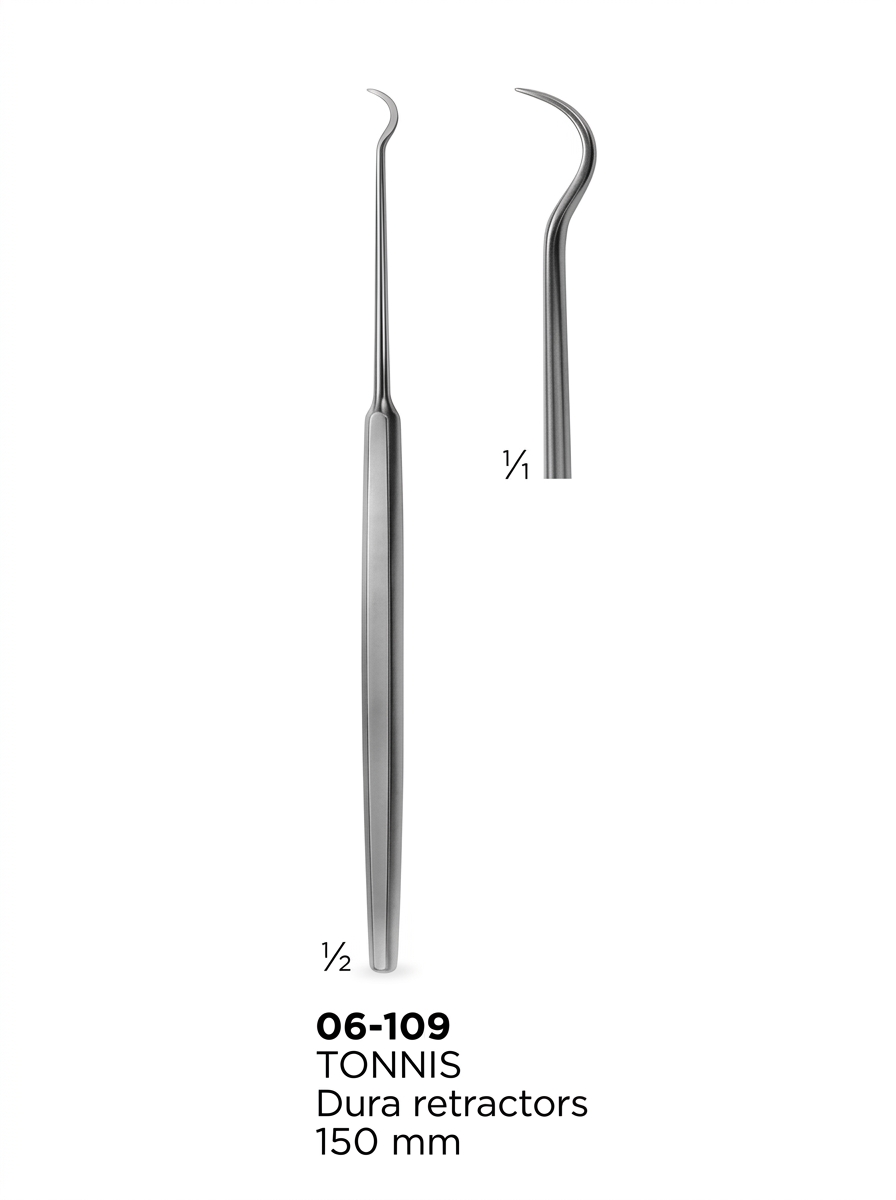
TONNIS Fine Wound Retractors Dura and Skin Retractors
Intro Description Engineered for neurosurgical, plastic, and delicate soft tissue interventions, the SIRGIKAL 06-109 Tönnis Fine Wound Retractor delivers precise tissue retraction, enhanced surgical site exposure, and absolute control in highly restricted operative fields. Featuring a refined profile specifically designed for delicate structures like the dura mater, superficial skin layers, and fine soft tissues, this instrument enables surgeons to gently hold back margins without causing trauma or crushing underlying structures. Crafted from certified medical-grade stainless steel with an ergonomic, well-balanced handle, it ensures dependable durability, smooth manipulation, and long-lasting performance across rigorous hospital sterilization cycles.
Product Specifications
-
Item Code: 06-109
-
Material: Certified Medical-Grade Stainless Steel (ASTM F899 compliant)
-
Size: Tönnis Fine Retractor Profile
-
Finish: Satin (Anti-glare) / Mirror
Key Features
-
Delicate Retraction Tips: Meticulously shaped hooks or prongs engineered to provide secure margin retention while protecting fragile soft tissues, dural membranes, and skin edges.
-
Ergonomic Handle Architecture: Balanced grip configuration ensures smooth maneuverability, exceptional tactile feedback, and reduced hand fatigue during intricate neurosurgical and reconstructive procedures.
-
Optimized Tension and Control: Designed to maintain steady, atraumatic retraction pressure over extended surgical durations.
-
Autoclave-Resistant Passivation: Chemical citric passivation forms a dense chromium-oxide protective barrier, guaranteeing complete corrosion resistance across repeated high-temperature hospital sterilization cycles.
Usage
-
Neurosurgery & Plastic Surgery: Gentle retraction of the dura mater, skin edges, and fine soft tissues during cranial, facial, or delicate microsurgical interventions.
-
Operating Theatre Utility: Essential precision retractor relied upon by surgeons requiring unobstructed visibility and delicate tissue management in confined anatomical corridors.