
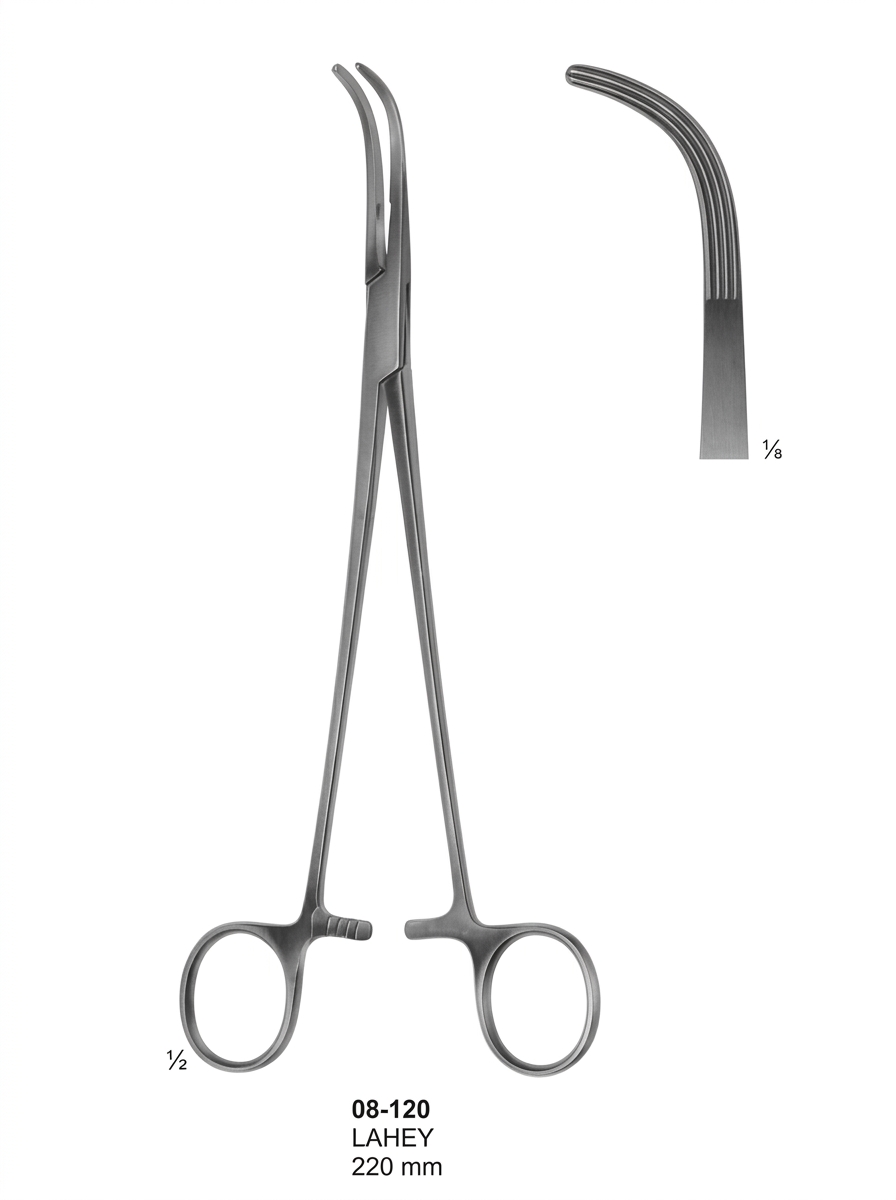
LAHEY Gall Duct Forceps
Intro Description Engineered for hepatobiliary, cholecystectomy, and specialized gastrointestinal procedures, the SIRGIKAL 08-120 Lahey Gall Duct Forceps deliver secure biliary duct exploration, precise calculus grasping, and absolute tactile control in delicate visceral corridors. Featuring right-angle or curved specialized jaws designed specifically for the atraumatic manipulation and clamping of the common bile duct or cystic structures, this instrument allows surgeons to navigate deep anatomical spaces with confidence. Crafted from certified medical-grade stainless steel with a secure multi-position ratchet locking mechanism, it ensures dependable durability, smooth jaw alignment, and long-lasting performance across rigorous hospital sterilization cycles.
Product Specifications
-
Item Code: 08-120
-
Material: Certified Medical-Grade Stainless Steel (ASTM F899 compliant)
-
Size: Standard Biliary Surgical Length (Lahey profile)
-
Finish: Satin (Anti-glare) / Mirror
Key Features
-
Specialized Biliary Jaw Architecture: Precision-machined right-angle or curved profile engineered for safe navigation around ducts and blood vessels, allowing secure clamping without tissue trauma.
-
Reliable Ratchet Mechanism: Provides adjustable, secure locking tension while maintaining smooth release control during delicate hepatobiliary dissections.
-
Ergonomic Shank & Finger Rings: Optimized weight distribution ensures comfortable handling, reduced hand fatigue, and superior tactile feedback under deep operative conditions.
-
Autoclave-Resistant Passivation: Chemical citric passivation forms a dense chromium-oxide protective barrier, guaranteeing complete corrosion resistance across repeated high-temperature hospital sterilization cycles.
Usage
-
Hepatobiliary & Gallbladder Surgery: Controlled clamping, duct exploration, and stone or tissue retrieval within the biliary tree.
-
Operating Theatre Utility: Essential specialized biliary instrument relied upon by general and hepatobiliary surgeons requiring dependable vessel occlusion and precise access in confined anatomical sites.