
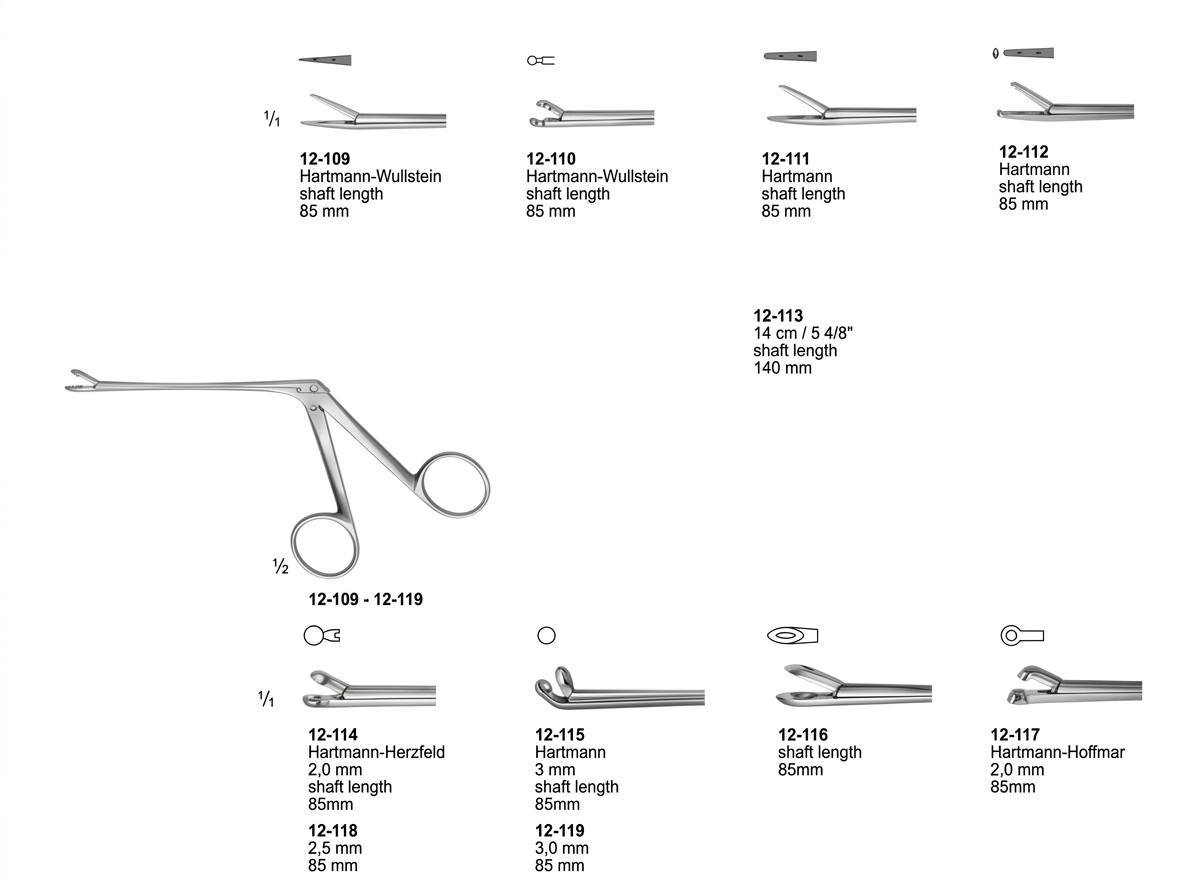
Ear Polypus Forceps
Intro Description Engineered for precision otological and rhinological microsurgery, the SIRGIKAL 12-109–12-119 Ear Polypus Forceps delivers secure grasping, excision, and removal of fine aural polyps, granulation tissue, and foreign bodies from restricted anatomical spaces. Featuring a delicate, slender shaft architecture and precision-aligned micro-jaws, this instrument is designed to navigate the narrow external auditory canal or nasal passages safely without obstructing the clinician’s line of sight. Crafted from certified medical-grade stainless steel with an ergonomic, well-balanced handle, it ensures dependable durability, smooth jaw action, and long-lasting performance across rigorous hospital sterilization cycles.
Product Specifications
-
Item Code: 12-109 to 12-119
-
Material: Certified Medical-Grade Stainless Steel (ASTM F899 compliant)
-
Size: Fine Otological / Microsurgical Length
-
Finish: Satin (Anti-glare) / Mirror
Key Features
-
Micro-Serrated Grasping Jaws: Finely engineered jaw tips provide a secure, non-slip grip on delicate polyps, soft tissue growths, or small foreign bodies.
-
Slender Shaft Profile: Narrow, elongated shank design optimizes visibility and maneuverability within the tight confines of the ear canal or nasal cavity.
-
Ergonomic Finger Ring Architecture: Balanced ring handles ensure smooth scissor-action control, exceptional tactile feedback, and reduced hand fatigue during delicate procedures.
-
Autoclave-Resistant Passivation: Chemical citric passivation forms a dense chromium-oxide protective barrier, guaranteeing complete corrosion resistance across repeated high-temperature hospital sterilization cycles.
Usage
-
Otology & ENT Surgery: Extracting aural polyps, granulation tissue, debris, or foreign objects from the external auditory meatus and middle ear spaces during microsurgical interventions.
-
Operating Theatre & Clinic Utility: Essential precision instrument relied upon by otolaryngologists and surgical specialists requiring dependable tissue management and secure grasping in confined anatomical corridors.