
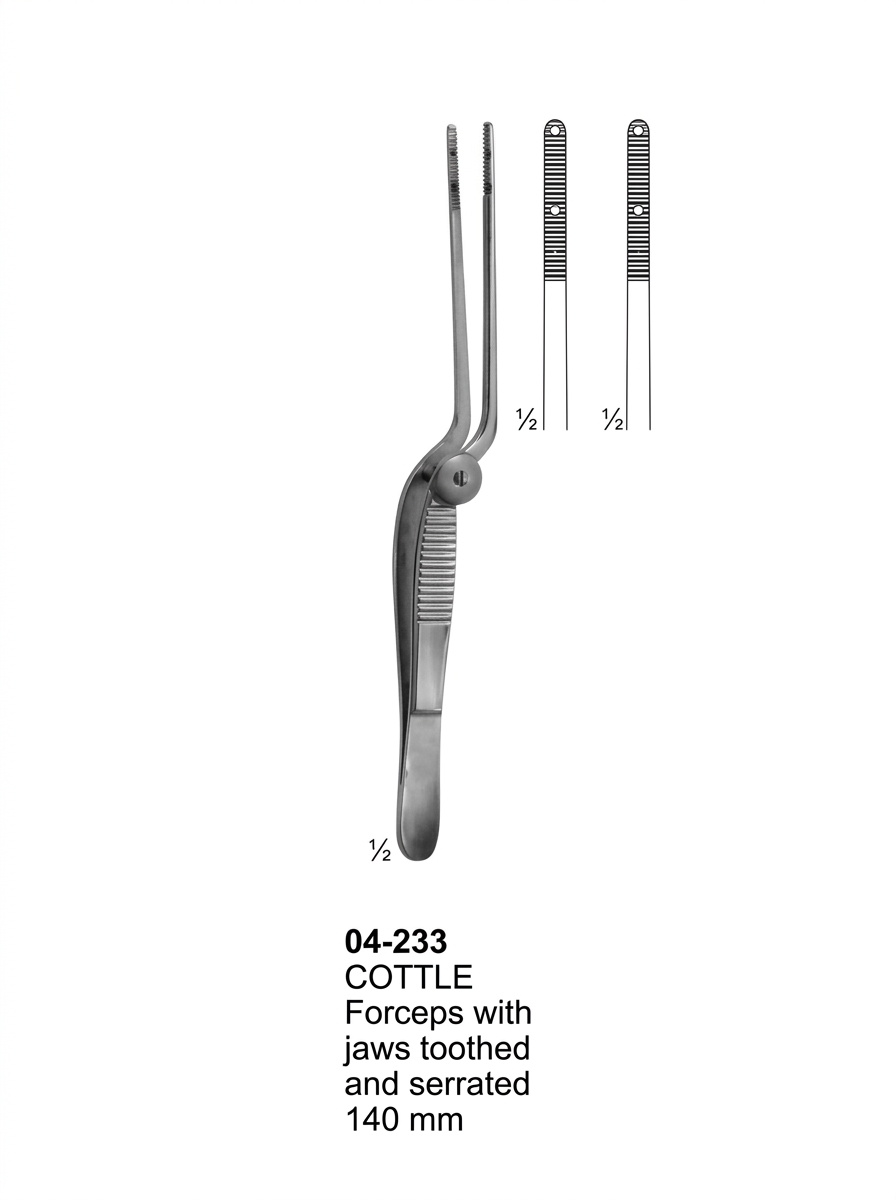
COTTLE Forceps Bayonet Shaped
Intro Description Engineered for otolaryngology (ENT), rhinology, and plastic facial surgery, the SIRGIKAL 04-233 Cottle Bayonet-Shaped Forceps deliver precise nasal cavity navigation, secure dressing placement, and absolute tactile control in deeply recessed anatomical sites. Featuring a distinct angled bayonet offset design combined with fine nasal-profile tips, this specialized instrument ensures that the surgeon’s hand remains outside the direct line of sight, maximizing visibility during septal and rhinoplasty procedures. Crafted from certified medical-grade stainless steel with a spring-tempered handle, it guarantees dependable durability, smooth jaw alignment, and long-lasting performance across rigorous hospital sterilization cycles.
Product Specifications
-
Item Code: 04-233
-
Material: Certified Medical-Grade Stainless Steel (ASTM F899 compliant)
-
Size: Standard Rhinoplasty Bayonet Length (Cottle profile)
-
Finish: Satin (Anti-glare) / Mirror
Key Features
-
Bayonet Offset Architecture: Angled shaft configuration provides an unobstructed line of sight into narrow nasal passages and deep surgical fields.
-
Precision Serrated Jaws: Finely milled gripping tips engineered to securely hold nasal packings, splints, cotton pledgets, or mucosal tissues without slipping.
-
Spring-Tension Handle: Balanced flat or round handle design ensures smooth closure, excellent tactile feedback, and reduced hand fatigue during delicate intranasal manipulations.
-
Autoclave-Resistant Passivation: Chemical citric passivation forms a dense chromium-oxide protective barrier, guaranteeing complete corrosion resistance across repeated high-temperature hospital sterilization cycles.
Usage
-
ENT & Rhinoplasty Surgery: Precision placement and removal of nasal dressings, septal packing, cotton pledgets, and the manipulation of delicate intranasal tissues.
-
Operating Theatre & Clinic Utility: Essential specialized bayonet instrument relied upon by ENTs and plastic surgeons requiring enhanced visibility and deep-reach control in confined sinonasal corridors.