
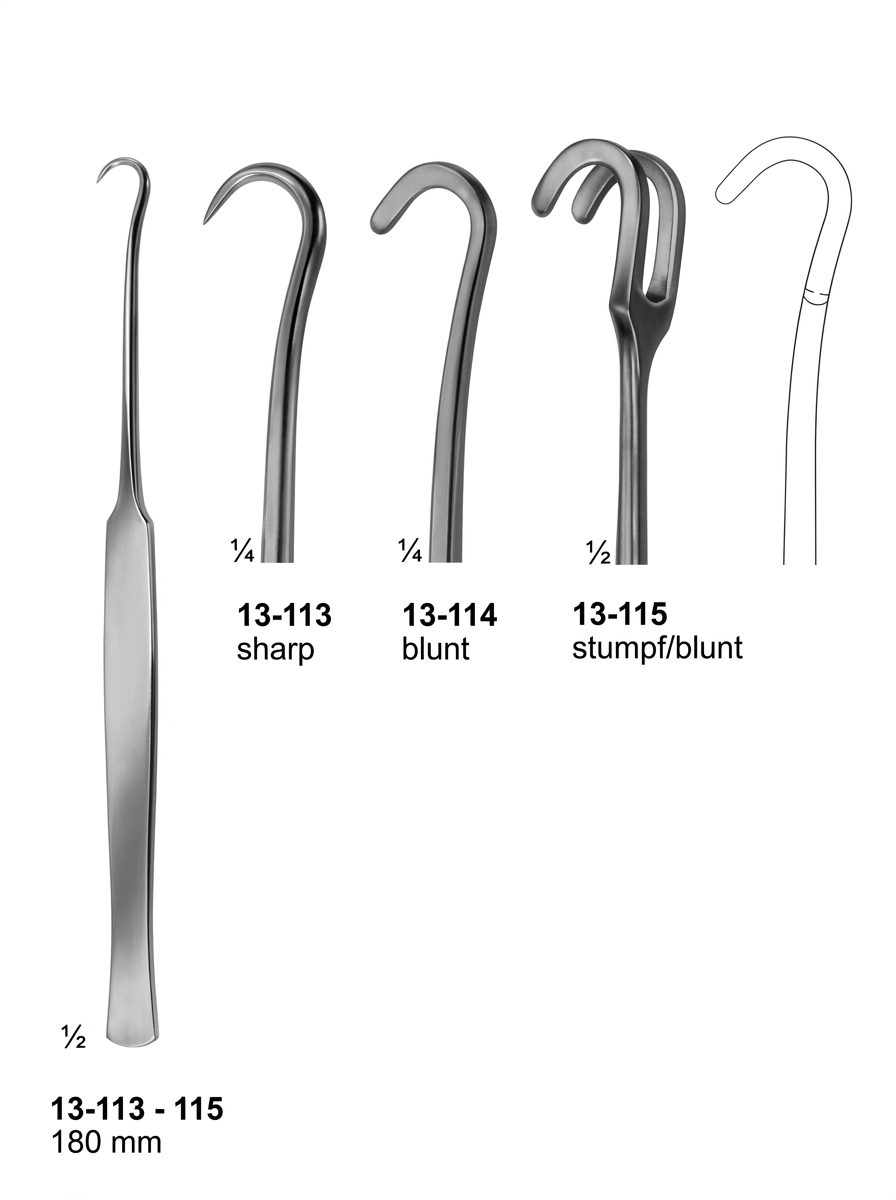
Tound and Tracheal Hooks and Dilators
Intro Description Engineered for precise retraction, delicate tissue mobilization, and safe anatomical exposure during thyroid, otolaryngological, and general neck surgical interventions, the SIRGIKAL 13-113 to 13-115 Wound and Tracheal Hooks and Dilators deliver exceptional tactile feedback, structural rigidity, and procedural control. Manufactured from certified medical-grade stainless steel featuring sharply angled hook tips and lightweight, balanced handles, these specialized instruments ensure secure tissue holding without compromising visibility. Featuring a corrosion-resistant satin finish and robust construction, they guarantee long-lasting performance and structural integrity across rigorous hospital sterilization cycles.
Product Specifications
-
Item Range: 13-113 through 13-115 (Tracheal & Wound Hook Pattern)
-
Material: Certified Medical-Grade Stainless Steel (ASTM F899 compliant)
-
Configuration: Single-Prong / Multi-Prong Tracheal & Wound Hooks and Dilators
-
Finish: Satin (Anti-glare) / Mirror
Key Features
-
Sharply Angled Hook Tips: Precision-ground tips securely engage superficial wound edges, muscle fibers, or tracheal rings with minimal tissue footprint.
-
Ergonomic Handle Grip: Lightweight, balanced handle ensures steady manual control and reduces hand fatigue during delicate, prolonged dissections.
-
Corrosion-Resistant Passivation: Chemical citric passivation forms a dense chromium-oxide protective barrier, guaranteeing complete corrosion resistance across repeated high-temperature hospital sterilization cycles.
-
Autoclave-Resistant Durability: Withstands repeated steam sterilization without degradation, pitting, or surface corrosion.
Usage
-
Thyroid & Neck Surgery: Retraction of delicate strap muscles, skin flaps, and soft tissues during thyroidectomy, tracheostomy, and anterior neck explorations.
-
Operating Theatre Utility: Essential handheld retraction and dilation instruments relied upon by general and ENT surgeons requiring precise anatomical exposure and tissue handling safety.